Listen: Common or Concerning with Laura Scherman
Clinical psychologist Laura Scherman joined Nato on Salt 106.5 to unpack some of the thoughts we all have but rarely talk about.
Key points:
- Imposter syndrome is so widespread it has a name, and it often signals you care deeply about what you do rather than that you’re failing.
- Intrusive thoughts are a normal part of being human. It’s the meaning we attach to them that can tip into something more serious.
- Snapping at your kids doesn’t make you a bad parent. Repairing the moment afterward is what counts.
Ever had a thought pop into your head that made you wonder, “Is that normal, or should I be worried?” You’re not alone.
Salt 106.5 breakfast host Nato sat down with local clinical psychologist Laura Scherman to play a round of “Common or Concerning” and the answers might surprise you.
Imposter Syndrome: Common
Nato opened with a “hypothetical”. Someone who talks to thousands of people every morning and quietly worries they’re just winging it. Laura didn’t miss a beat.
“It’s actually so common that we have a name for it,” she said. “We call it imposter syndrome.”
She explained that the feeling of being one scratch away from being “found out” tends to hit high achievers hardest, and that it’s often less a sign of failure and more a sign that you genuinely care about what you do.
The concern kicks in when those feelings start shrinking your world, causing you to avoid opportunities or pull back from things you’d otherwise step into. At that point, Laura says, it’s worth getting some support.
Intrusive Thoughts: Common (Usually)
From worrying about dropping a newborn’s head to imagining a car crash mid-drive, intrusive thoughts are something most people experience but few talk about openly. Laura normalised them quickly.
“Just the thought in itself that just sort of pops into your head that might be unwanted and intrusive is not necessarily problematic in and of itself,” she said.
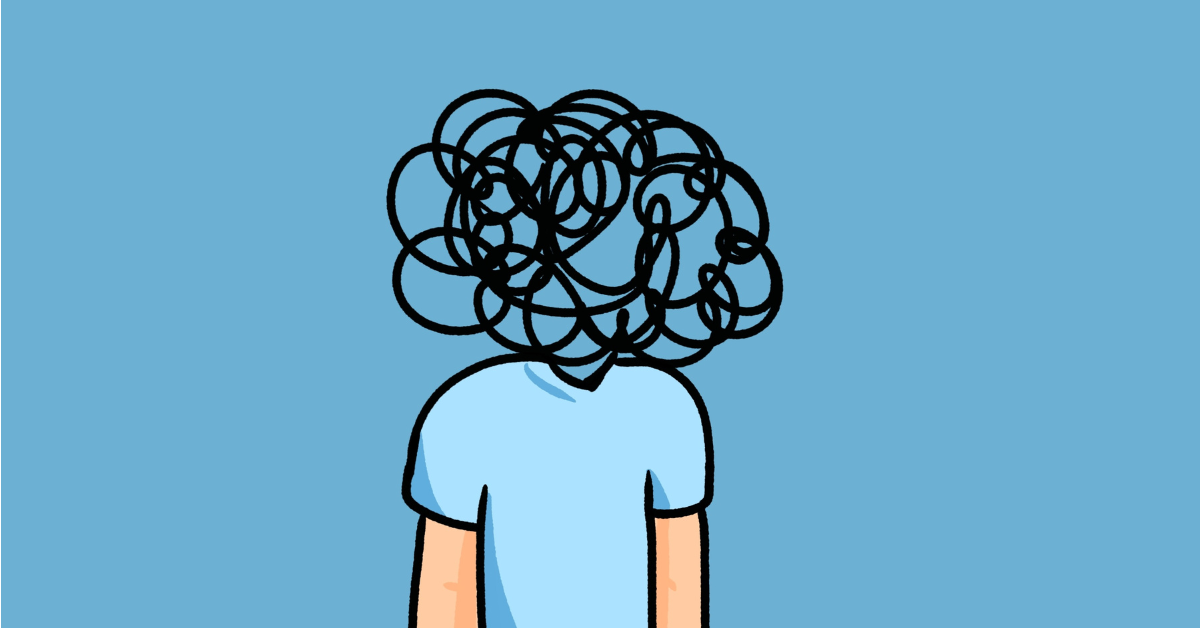
The trouble starts when we attach meaning to those thoughts. Telling yourself “I had that thought, so it must mean something terrible about me” is where things can spiral.
Laura pointed to acceptance commitment therapy’s approach of simply labelling the thought and stepping back from it, rather than trying to wrestle it into submission. Trying to suppress a thought, she noted, tends to make it louder, like being told not to picture a pink elephant.
When intrusive thoughts begin affecting daily life or pushing into rituals and compulsive behaviours, that moves into concerning territory, and is worth exploring with a professional.
Snapping at Your Kids: Common
Nato shared a moment of honest parenting. His toddler said “dad” on repeat, he answered, the boy said “dad” again, and Nato snapped. Laura’s response was immediate reassurance.
“I would be shocked if any parent listening to this said they have never, even a tiny little bit, not responded quite the way they wanted to,” she said.
She introduced the concept of the “window of tolerance”, the psychological bandwidth we each have for handling stress before our nervous system tips into fight or flight mode.
“It’s not about perfect parenting, but it is about us just continuing to learn.”
A child repeating the same word twenty times is just one more layer of input on top of everything else already running in the background.
The key, Laura said, isn’t perfect parenting. It’s repair. Coming back after a snappy moment, reconnecting, and modelling that process for your kids matters more than never losing your cool.
Not Being Able to Visualise: Not Quite Common or Concerning
The final topic was aphantasia, the experience of not being able to picture things in your mind’s eye.
Nato described a friend who tried to picture an apple and simply couldn’t see it, while Nato himself can conjure the colour, shape, and texture clearly.
Laura revealed she relates to the friend entirely.
“I literally thought someone had told me I was blind my whole life,” she said of the moment she first learned about the phenomenon.
Aphantasia sits on a spectrum. Some people see vivid mental images, others see outlines or shadows, and some think almost entirely in concepts.
Laura noted that even some of the most celebrated creative minds work this way. It doesn’t limit imagination or output, it just means brains are built differently.
“We are this human experience, we’re all in this together, and it’s good to kind of talk about so people feel less alone”
Her verdict? Not common, not concerning. Just fascinating.
If any of today’s topics are hitting closer to home than expected, Laura’s encouragement is simple: talk to your GP or a psychologist. You’re not alone in what you’re experiencing, and help is available.
Listen to the full interview in the player above.
Feature image: Canva Pro
Get daily encouragement delivered straight to your inbox
Writers from our Real Hope community offer valuable wisdom and insights based on their own experiences!
Subscribe + stay connected with all
our latest stories
"*" indicates required fields
More from Health and Wellbeing