What antioxidants and free radicals really do inside the body, and why balance matters most
Key points:
- Naturopath Hannah Moore explains antioxidants and free radicals at a molecular level, describing antioxidants as “givers” that help neutralise free radicals that “take.”
- Hannah warns that antioxidant-rich foods and drinks are often marketed for their benefits while hiding less healthy additives, so reading labels closely matters.
- She encourages a lifestyle of good diet, sleep and reduced stress to keep the body’s antioxidant and free radical balance in check and connects that physical health to spiritual wellbeing through faith.
We hear all the time that antioxidants are “good for us,” but how many of us actually know why?
Salt 106.5 breakfast host Nato sat down with local naturopath Hannah Moore to unpack what’s really happening at a molecular level, and why it matters for our health.
Good guys and free radicals
Hannah explained that naturopathic medicine is all about prevention, understanding what makes us sick so we can avoid it in the first place.
“We seem to know what’s good for us, but we often don’t do it,” Hannah told Salt 106.5.
“I feel like the missing point is people don’t actually understand why things are bad for them and how it causes sickness.”
To make sense of it, Hannah broke antioxidants and their opposite, free radicals, down into a simple picture.
“An antioxidant is, I like to think of him as a good guy. He goes around and he likes to give and help people who are free radicals,” Hannah said.
“You can think of a free radical as a person who’s lost his way. He doesn’t really care who he hurts in the process to get what he needs.”
At an atomic level, that “giving” and “stealing” happens between electrons, and when there are too many free radicals stealing and not enough antioxidants giving, that imbalance becomes the foundation of sickness in the body.
Reading past the marketing
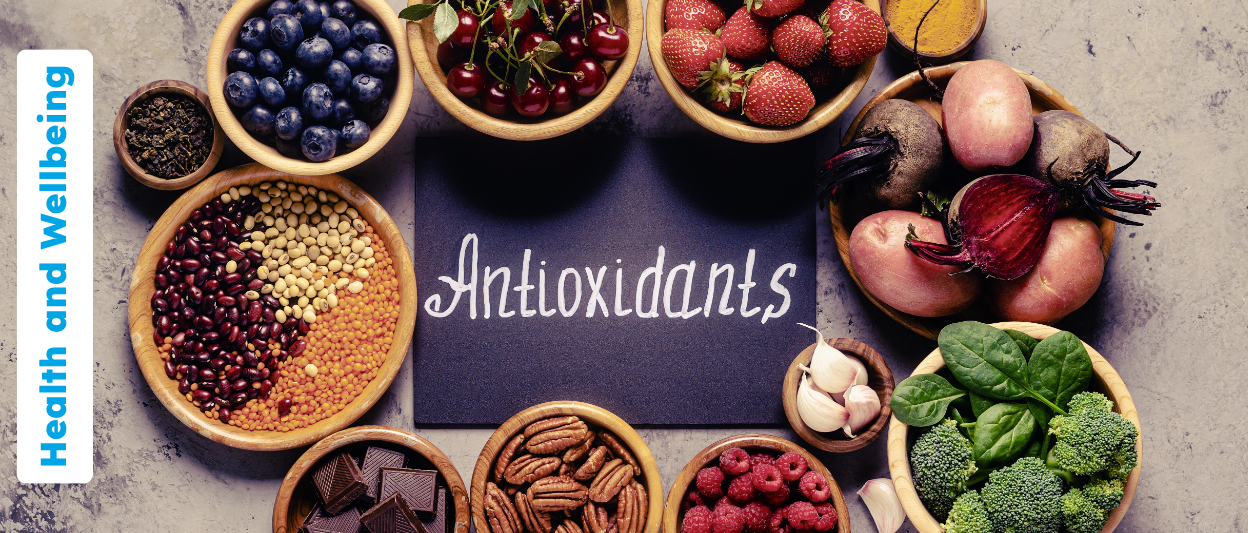
Hannah pointed out that while foods like berries, cacao, green tea and red wine are genuinely high in antioxidants, that’s exactly why they’re marketed so heavily.
“We’ve got an issue with marketing,” Hannah said.
“They’ll only tell you what’s good. So you’ve got to go and read that label.”
She encouraged listeners to look past the headline claim on packaging and check what else has been added, since flavours, colours and sweeteners are often synthetic and can carry their own free radical load.
We’ve got an issue with marketing. They’ll only tell you what’s good. So you’ve got to go and read that label.
Why balance matters
Free radicals themselves aren’t the enemy; they’re part of the body’s natural immune process. Problems start when the balance tips too far.
“It’s all about the balance,” Hannah said.
“We want to have more goodies than we do have baddies.”
Baddies, she explained, include smoking, excess sugar, poor sleep, chemicals, pesticides and an overreliance on pharmaceuticals instead of caring for the body.
Left unaddressed, that imbalance can silently underlie serious health issues.
“Underlying every disease process is an imbalance of antioxidants and free radicals,” Hannah said.
Simple ways to top up
Hannah’s advice centres on lifestyle: a healthy diet, good sleep, lower stress and cutting back on processed foods. Antioxidant-rich foods like broccoli and berries help, along with supplements such as zinc, selenium, glutathione, vitamin C and vitamin E.
She also noted that exercise, while good for us, produces free radicals of its own, so a diet rich in antioxidants helps the body keep up.
A physical and spiritual picture
For Hannah, the science keeps circling back to faith. She sees natural, God-given rhythms, good food, rest, movement and community, as central to how our bodies were designed to thrive.
“That’s how we were made, but the modern world is taking us further and further away from that.”
She also spoke to the role faith can play in healing more broadly.
“Your body can heal itself. And then you add a bit of Jesus in there and it can double heal itself,”
“We’ve got a physical body and it needs physical food, and we’ve got a spiritual body and we need to look after ourselves on both levels.”
The conversation closed on a simple challenge: to live a little more like antioxidants ourselves.
“As Christians, that’s what we’re called to do,” Hannah said.
“We’re called to help the poor, the suffering, the people who are lost and confused. Help them, support them, give to them.”
Listen to the full interview in the player above.
Feature image: Canva Pro
Get daily encouragement delivered straight to your inbox
Writers from our Real Hope community offer valuable wisdom and insights based on their own experiences!
Subscribe + stay connected with all
our latest stories
"*" indicates required fields
More from Health and Wellbeing