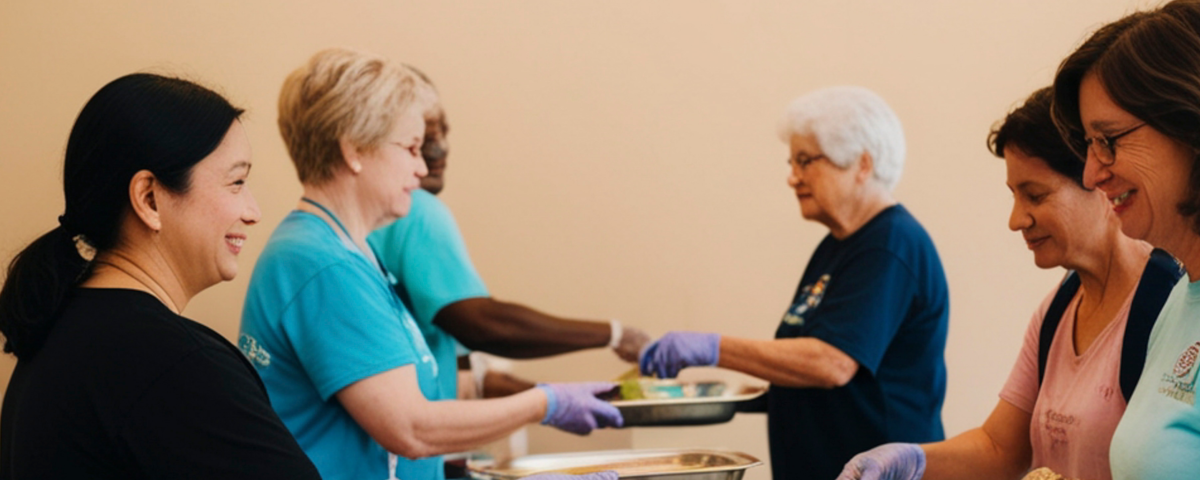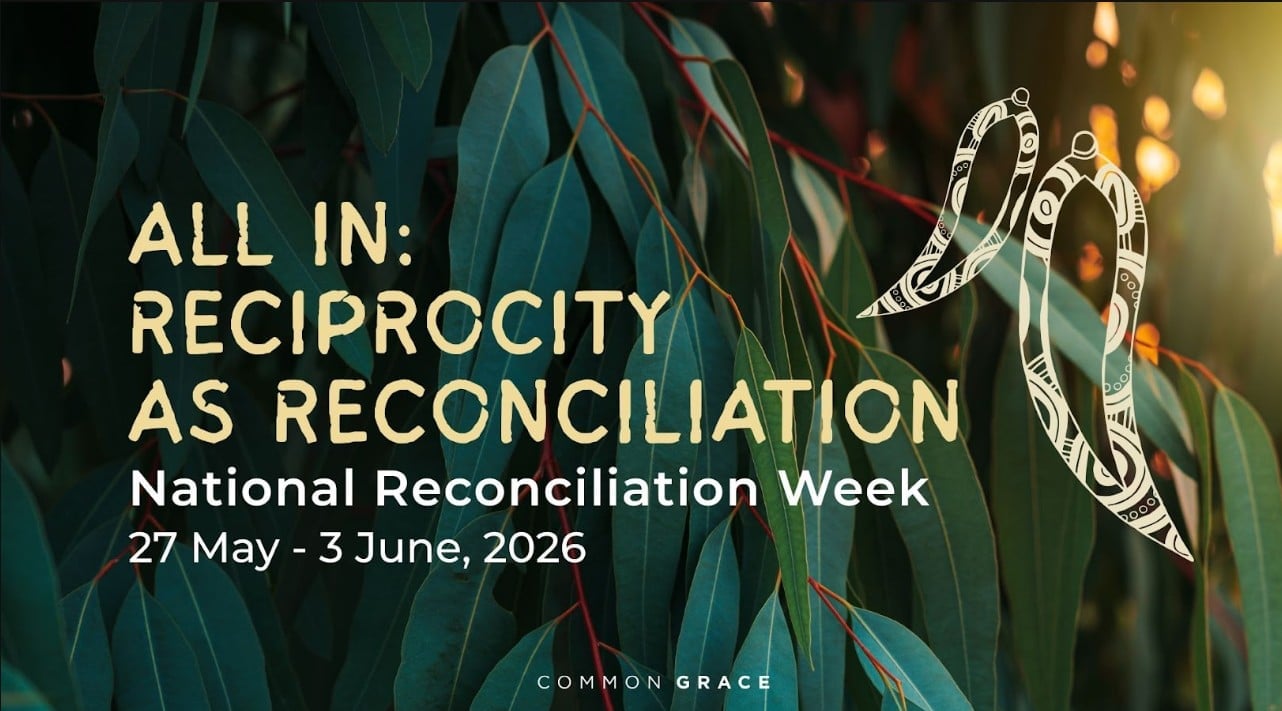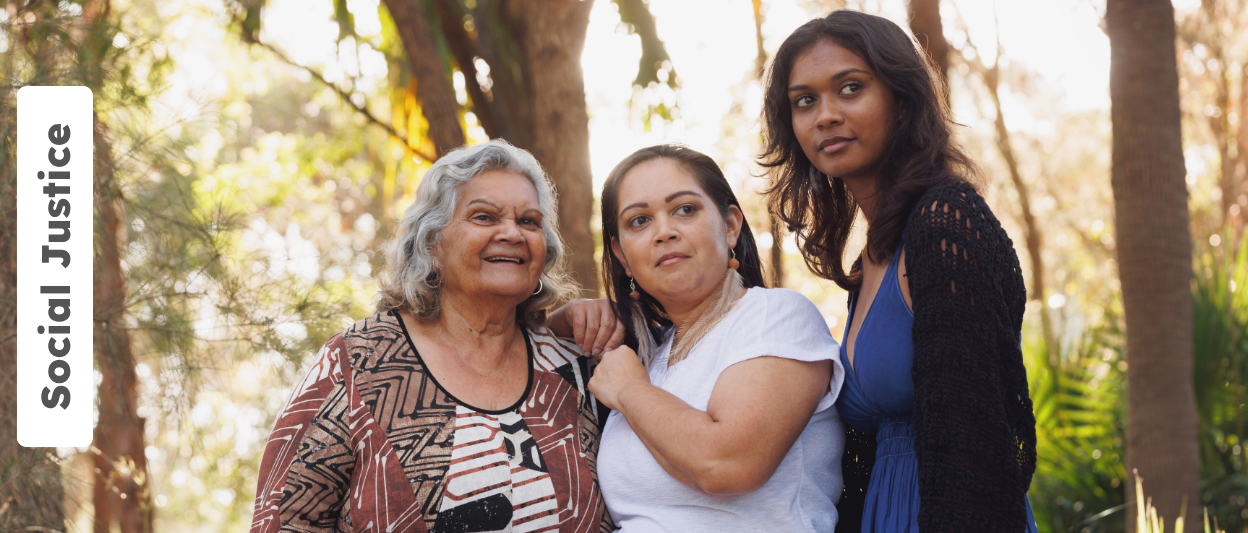
“Being 'all in' is each one of us getting in together, taking responsibility, sharing the work, loving each other, working beside each other.” Aunty Donna Meehan wants every Australian to get aboard the “all in” theme of National Reconciliation Week 2026.
Key points:
- Aunty Donna Meehan says reconciliation begins with listening, shared responsibility and practical action
- Safina Stewart highlights both national progress and ongoing inequality, calling for deeper structural change
- Both point to faith and the example of Jesus as central to healing, justice and hope in Australia
Along with Safina Stewart, Aunty Donna is part of Common Grace’s videos, resources and encouragement for this year’s National Reconciliation Week 2026.
As Aunty Donna told, reconciliation isn’t a distant idea or a once-a-year event.
It’s relational. It’s practical. And it’s grounded in listening well.
She spoke about “coming into that space and listening to Aboriginal people, to their stories of hope and their lived experiences, what they’ve been through”.
That posture of listening leads to action.
“Taking action, doing something — what would Jesus have me do?” Aunty Donna said.
“We’re the ones responsible for building the Australia that we want to build together.”
Her picture is not of a few leaders carrying the load, but of many hands, softened hearts and shared responsibility.
An invitation that is both gentle and urgent: step in, stand alongside, and take the next right step together.
Progress worth celebrating, gaps we can’t ignore
National Reconciliation Week 2026 raises many emotions, issues and questions.
National Reconciliation Week 2026 brings with it many emotions, issues and questions.
Providing insight to Hope Mornings was Common Grace’s Safina Stewart.
Safina spoke in detail about the progress Australia has already made towards reconciliation between Indigenous and non-Indigenous people.
“We’ve made a lot of progress, and there’s still a lot more to be done,” she said.
She pointed to defining national moments — from the landmark 1967 Referendum, to the 2008 National Apology — as well as growing recognition of First Nations culture and history.
These shifts have helped shape a more aware and respectful Australia.
At the same time, national data backs up Safina’s concern that progress has been uneven or non-existent.
The latest Closing the Gap reportinp shows some improvements but “there are still significant inequalities in health, housing, education, incarceration,” Safina said.
For example, incarceration rates for First Nations people are worsening rather than improving. Aboriginal and Torres Strait Islander adults remain dramatically over-represented in prison systems, with rates many times higher than non-Indigenous Australians.
“We mustn’t just have symbolic gestures,” Safina said. “We need actual structural change. We need justice.”
She also spoke about the emotional weight following the 2023 Voice to Parliament referendum, where more than 60 per cent of Australians voted “No”.
That result, she said, has brought “lingering grief and sadness” and revealed deep division.
And yet, there are signs of hope.
The latest Australian Reconciliation Barometer shows 85 per cent of Australians believe the relationship between First Nations and non-Indigenous people is important.
“There are so many things that have happened that are remarkable, and yet we must not ignore the fact that there is still so much that needs to be addressed,” Safina said.
Jesus and the church: a path to healing and justice
Aunty Donna and Safina are clear — faith is not separate from reconciliation; it’s central to it.
“Jesus has commissioned us to do this, and he is our example,” Aunty Donna said.
Reflecting on her own childhood experiences of racism, she shared, “I learned to take it to the Lord in prayer… and the Church has a vital role to play in bringing healing to this nation.”
She painted a hopeful picture of what that can look like: reconciliation circles, shared Bible studies, schools learning together, and visible signs of respect such as flags and Acknowledgements of Country.
“These are practical examples of reconciliation… people working and collaborating together, wanting to make a difference,” she said.
Safina builds on that, pointing to Jesus as the model of justice and mercy.
“We have the greatest example in Jesus. He challenged injustices, he lifted the weary. He transforms lives with healing and forgiveness and restoration,” Safina said.
Bringing that truth into the present, she didn’t shy away from the ongoing reality.
“Our people continue to experience struggle, pain and exclusion, and we know that Jesus is present in those spaces, bringing transformation. Reconciliation is a God thing, and justice is a God thing. I have hope that together, as communities, we can bring about positive change. I have even greater hope in what is possible when God is at work,” Safina said.
Feature image: Canva Pro
Get daily encouragement delivered straight to your inbox
Writers from our Real Hope community offer valuable wisdom and insights based on their own experiences!
Subscribe + stay connected with all
our latest stories
"*" indicates required fields
More from Social Justice